
How to Choose an Apparel Manufacturer: 10 Proven Steps for Smart Brands

How to Choose an Apparel Manufacturer: 10 Proven Steps for Smart Brands Choosing the right production partner is one of the biggest decisions a fashion brand will ever make. Get it right, and you gain a reliable partner that grows with your business. Get it wrong, and you risk missed deadlines, inconsistent quality, and damaged customer trust. This guide walks B2B buyers through exactly how to choose an apparel manufacturer that matches their product, budget, and long-term growth plans. Whether you’re a startup placing your first bulk order or an established brand expanding into a new category, knowing how to choose an apparel manufacturer the right way can save you months of frustration and thousands of dollars in rework. Featured Snippet Answer: To choose an apparel manufacturer, evaluate their product category experience, MOQ and pricing structure, quality control process, compliance standards, sampling capability, communication responsiveness, and production capacity — then confirm everything through references, samples, or a factory audit before committing to bulk production. Table of Contents Why Knowing How to Choose an Apparel Manufacturer Matters Step 1: Define Your Product and Production Needs Step 2: Understand Different Manufacturer Types Step 3: Check Product Category Experience Step 4: Evaluate MOQ and Pricing Step 5: Review the Sampling Process Step 6: Assess Quality Control Standards Step 7: Verify Compliance and Certifications Step 8: Confirm Lead Time and Production Capacity Step 9: Test Communication and Responsiveness Step 10: Request References or a Factory Audit Apparel Manufacturer Comparison Checklist Common Mistakes When Choosing an Apparel Manufacturer Expert Tips for Choosing an Apparel Manufacturer Frequently Asked Questions Conclusion Why Knowing How to Choose an Apparel Manufacturer Matters Every sourcing decision starts with the same question: how to choose an apparel manufacturer that can deliver consistent quality at the volume and price point your business needs. This decision affects everything downstream — your product quality, your delivery timelines, your compliance standing, and ultimately your relationship with retailers and customers. Brands that skip proper vetting often discover problems only after placing a bulk order, when it’s too late to fix them cheaply. That’s why learning how to choose an apparel manufacturer methodically, rather than reactively, is one of the most valuable skills a sourcing manager or brand founder can develop. Step 1: Define Your Product and Production Needs Before you can evaluate any factory, you need clarity on what you’re actually producing. This is the foundation of how to choose an apparel manufacturer that fits your brand. Ask yourself: What product categories do you need (wovens, knits, outerwear, activewear)? What is your expected order volume per style? Do you need OEM, ODM, or private label production? What is your target price point and margin structure? Having clear answers to these questions makes every later step of choosing an apparel manufacturer faster and more accurate. Step 2: Understand Different Manufacturer Types Not all factories operate the same way, and understanding these differences is a core part of how to choose an apparel manufacturer correctly. OEM Manufacturers produce garments based entirely on your own design and tech pack. ODM Manufacturers offer existing designs that you can customize. Private Label Manufacturers produce from a base pattern that you brand as your own. Full-Package Manufacturers handle sourcing, sampling, and production end-to-end. CMT (Cut, Make, Trim) Manufacturers only assemble garments from fabric you supply. Matching your business model to the right manufacturer type is a critical early decision in how to choose an apparel manufacturer that will actually meet your needs. Step 3: Check Product Category Experience A manufacturer that specializes in denim may not be the right fit for technical activewear. When learning how to choose an apparel manufacturer, always confirm their specific experience with your product category. Ask for: Examples of similar products they’ve manufactured Fabric and construction expertise relevant to your designs Any specialized machinery required for your garments (e.g., bonding, laser cutting, embroidery) This step alone eliminates many mismatched partnerships before they start. Step 4: Evaluate MOQ and Pricing Minimum Order Quantity (MOQ) and pricing structure are often the deciding factors in how to choose an apparel manufacturer, especially for startups and smaller brands. Key questions to ask: What is the MOQ per style, color, and size? Is MOQ negotiable for repeat customers or combined orders? How does pricing change at different volume tiers? Are sampling costs separate from production costs? Since MOQ and pricing vary widely between manufacturers, it’s important to get a detailed quotation based on your actual tech pack rather than relying on general estimates. Step 5: Review the Sampling Process Sampling quality is one of the clearest indicators of how a factory will perform in bulk production, which makes it an essential part of how to choose an apparel manufacturer. Look for a manufacturer that offers: Prototype and fit samples Pre-production (PP) samples for final approval Size set samples across your full range Clear timelines for each sampling round If a manufacturer is slow or unresponsive during sampling, this is often a warning sign for how they’ll perform during bulk production. Step 6: Assess Quality Control Standards Quality control practices are non-negotiable when deciding how to choose an apparel manufacturer for long-term partnership. Confirm whether the factory performs: Inspection Stage Purpose Incoming Inspection Checks raw materials before cutting begins Inline Inspection Monitors garments during production Final Inspection Reviews finished goods before packing AQL Inspection Statistical sampling to assess defect rates A manufacturer with structured, multi-stage quality control is far more likely to deliver consistent results across every order. Step 7: Verify Compliance and Certifications Compliance is an increasingly important factor in how to choose an apparel manufacturer, particularly for brands selling into regulated retail markets. Areas to verify include: Social compliance and fair labor practices Environmental compliance and waste management Willingness to accommodate third-party factory audits Relevant certifications such as GOTS, OEKO-TEX®, WRAP, or ISO standards, where applicable to your product Always confirm current certification status directly with the manufacturer rather than assuming based on marketing claims. Step 8: Confirm Lead Time
What Is OEM Clothing Manufacturing? 12 Proven Benefits Every Fashion Brand Should Know
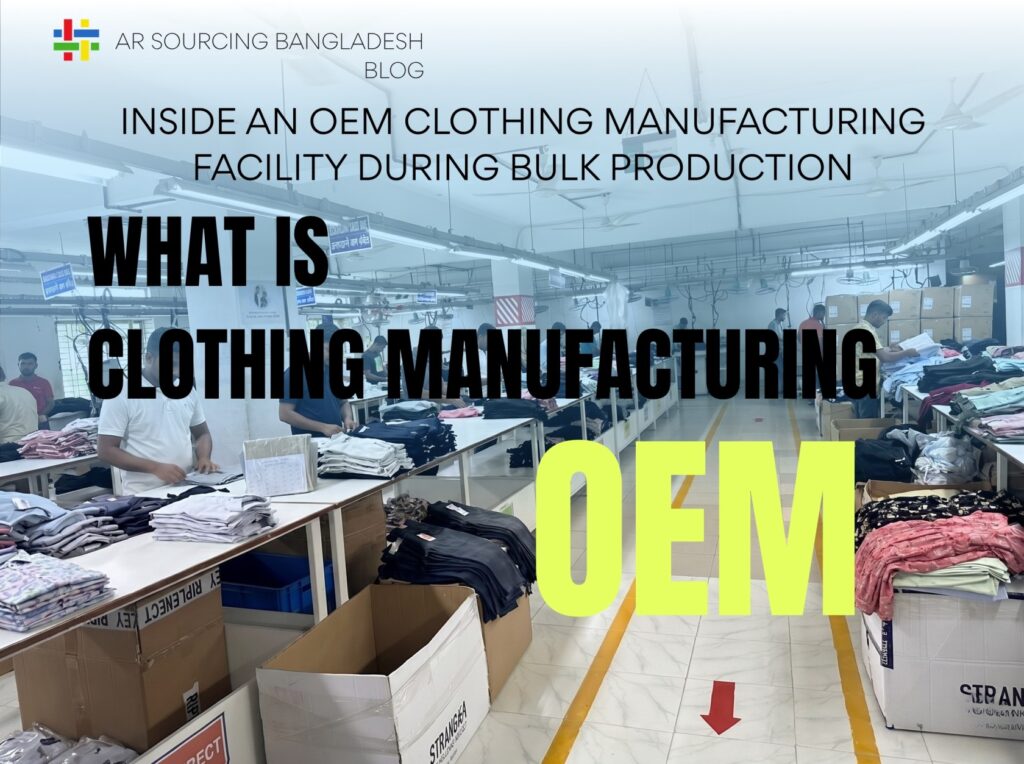
What Is OEM Clothing Manufacturing? 12 Proven Benefits Every Fashion Brand Should Know If you’re a fashion brand, retailer, or sourcing manager trying to scale production without building your own factory, you’ve probably come across the term OEM more than once in supplier conversations. Understanding what is OEM clothing manufacturing is one of the first steps toward making smarter sourcing decisions, controlling production costs, and building a reliable supply chain. This guide breaks down the OEM model in plain, professional language — how it works, how it compares to ODM and private label production, what it costs, and how to choose a manufacturing partner that fits your brand’s growth stage. Featured Snippet Answer: OEM clothing manufacturing is a production model where a factory manufactures garments based entirely on a brand’s own designs, tech packs, and specifications. The brand owns the design and intellectual property, while the manufacturer handles sourcing, sampling, cutting, sewing, quality control, and packaging according to the brand’s exact requirements. Table of Contents What Is OEM Clothing Manufacturing? How OEM Clothing Manufacturing Works OEM Clothing Manufacturing Process Benefits of OEM Clothing Manufacturing OEM vs ODM Clothing Manufacturing OEM vs Private Label Clothing Manufacturing Why Fashion Brands Choose OEM Clothing Manufacturing Industries That Use OEM Clothing Manufacturing MOQ in OEM Clothing Manufacturing Sampling Process Lead Time Quality Control Compliance Sustainability Cost Factors How to Choose the Right OEM Clothing Manufacturer Common Mistakes Expert Tips Frequently Asked Questions Conclusion What Is OEM Clothing Manufacturing? OEM clothing manufacturing stands for Original Equipment Manufacturing — a production arrangement in which a garment factory produces clothing strictly according to a brand’s own designs, patterns, and technical specifications. The brand supplies the tech pack, fabric preferences, measurements, and construction details; the manufacturer executes production without contributing to the design itself. In simple terms, OEM is a “you design it, we build it” partnership. The factory acts as a production engine — cutting, sewing, finishing, and packing garments — while the brand retains full ownership of the design, the brand identity, and the intellectual property behind the product. This is different from manufacturers who sell pre-made or lightly customizable designs, because in true OEM apparel manufacturing, nothing is copied from an existing catalog. Every specification originates from the client. How OEM Differs From Other Manufacturing Models To understand what is OEM clothing manufacturing at a deeper level, it helps to see how it differs from two commonly confused models: ODM (Original Design Manufacturing): The factory designs the product, and the brand customizes elements like fabric, color, or branding. Private Label Manufacturing: The factory produces from an existing base pattern or blank product, which the brand then labels and sells under its own name. OEM Manufacturing: The brand supplies the complete original design, and the factory manufactures it exactly as specified. This distinction matters because it directly affects who owns the design, how much customization is possible, and how much creative control a brand retains throughout production. How OEM Clothing Manufacturing Works OEM production follows a structured workflow that moves a garment from a brand’s concept to a finished, shipped product. Here’s the general sequence most OEM apparel manufacturers follow: Product Idea – The brand defines the garment concept, target market, and design direction. Tech Pack Development – The brand (or its product development team) creates a tech pack containing measurements, construction details, trims, colorways, and labeling instructions. Fabric Sourcing – The manufacturer sources or confirms fabrics based on the brand’s specifications, including composition, weight, and performance requirements. Sampling – The factory produces prototype and fit samples for the brand’s review and approval. Pattern Making – Patterns are drafted or digitized based on approved samples and grading requirements. Approval – The brand reviews samples, requests revisions if needed, and signs off before bulk production begins. Bulk Production – Cutting, sewing, and assembly take place at scale according to the confirmed order quantity. Quality Control – Garments are inspected at multiple stages to ensure they meet the brand’s specifications. Packaging – Finished garments are folded, tagged, and packed according to the brand’s packaging guidelines. Shipping – Completed orders are shipped to the brand’s warehouse, distribution center, or retail destination. This workflow is the backbone of what is OEM clothing manufacturing in practice — a repeatable, specification-driven process rather than an off-the-shelf purchase. OEM Clothing Manufacturing Process Let’s look deeper at each production stage, since understanding the full process helps buyers set realistic expectations and avoid costly miscommunication. 1. Design and Specification Handoff The brand provides a complete tech pack, including flat sketches, measurement charts, stitch details, trims, and artwork files. The more detailed this handoff, the fewer revisions are needed later. 2. Fabric and Trim Sourcing The manufacturer sources fabrics, threads, zippers, buttons, and labels according to the brand’s specifications. Brands may also supply their own fabric (sometimes called CMT — Cut, Make, Trim) or ask the manufacturer to source it on their behalf. 3. Pattern Making and Grading Skilled pattern makers translate the tech pack into a working pattern, then grade it across the brand’s required size range. 4. Sampling and Fit Approval Multiple sample rounds confirm fit, construction, and overall quality before mass production starts. This stage is covered in more detail later in this article. 5. Bulk Cutting and Sewing Once samples are approved, fabric is cut in bulk and moved through sewing lines. Larger factories use assembly-line production, where each operator specializes in a specific operation (collar attachment, sleeve setting, hemming, etc.). 6. In-Process Quality Checks Inspectors monitor garments during production, not just at the end, to catch defects early and reduce rework. 7. Finishing and Pressing Garments are trimmed of loose threads, pressed, and prepared for final inspection. 8. Final Inspection and Packaging A final quality check confirms the order meets agreed standards before garments are folded, tagged, polybagged, and cartoned. 9. Shipping and Logistics Finished goods are shipped via sea, air, or courier depending on order size, urgency, and budget. Benefits of OEM Clothing Manufacturing Understanding what is OEM clothing