What Is OEM Clothing Manufacturing? 12 Proven Benefits Every Fashion Brand Should Know
If you’re a fashion brand, retailer, or sourcing manager trying to scale production without building your own factory, you’ve probably come across the term OEM more than once in supplier conversations. Understanding what is OEM clothing manufacturing is one of the first steps toward making smarter sourcing decisions, controlling production costs, and building a reliable supply chain.
This guide breaks down the OEM model in plain, professional language — how it works, how it compares to ODM and private label production, what it costs, and how to choose a manufacturing partner that fits your brand’s growth stage.
Featured Snippet Answer: OEM clothing manufacturing is a production model where a factory manufactures garments based entirely on a brand’s own designs, tech packs, and specifications. The brand owns the design and intellectual property, while the manufacturer handles sourcing, sampling, cutting, sewing, quality control, and packaging according to the brand’s exact requirements.
Table of Contents
- What Is OEM Clothing Manufacturing?
- How OEM Clothing Manufacturing Works
- OEM Clothing Manufacturing Process
- Benefits of OEM Clothing Manufacturing
- OEM vs ODM Clothing Manufacturing
- OEM vs Private Label Clothing Manufacturing
- Why Fashion Brands Choose OEM Clothing Manufacturing
- Industries That Use OEM Clothing Manufacturing
- MOQ in OEM Clothing Manufacturing
- Sampling Process
- Lead Time
- Quality Control
- Compliance
- Sustainability
- Cost Factors
- How to Choose the Right OEM Clothing Manufacturer
- Common Mistakes
- Expert Tips
- Frequently Asked Questions
- Conclusion

What Is OEM Clothing Manufacturing?
OEM clothing manufacturing stands for Original Equipment Manufacturing — a production arrangement in which a garment factory produces clothing strictly according to a brand’s own designs, patterns, and technical specifications. The brand supplies the tech pack, fabric preferences, measurements, and construction details; the manufacturer executes production without contributing to the design itself.
In simple terms, OEM is a “you design it, we build it” partnership. The factory acts as a production engine — cutting, sewing, finishing, and packing garments — while the brand retains full ownership of the design, the brand identity, and the intellectual property behind the product.
This is different from manufacturers who sell pre-made or lightly customizable designs, because in true OEM apparel manufacturing, nothing is copied from an existing catalog. Every specification originates from the client.
How OEM Differs From Other Manufacturing Models
To understand what is OEM clothing manufacturing at a deeper level, it helps to see how it differs from two commonly confused models:
- ODM (Original Design Manufacturing): The factory designs the product, and the brand customizes elements like fabric, color, or branding.
- Private Label Manufacturing: The factory produces from an existing base pattern or blank product, which the brand then labels and sells under its own name.
- OEM Manufacturing: The brand supplies the complete original design, and the factory manufactures it exactly as specified.
This distinction matters because it directly affects who owns the design, how much customization is possible, and how much creative control a brand retains throughout production.
How OEM Clothing Manufacturing Works
OEM production follows a structured workflow that moves a garment from a brand’s concept to a finished, shipped product. Here’s the general sequence most OEM apparel manufacturers follow:
- Product Idea – The brand defines the garment concept, target market, and design direction.
- Tech Pack Development – The brand (or its product development team) creates a tech pack containing measurements, construction details, trims, colorways, and labeling instructions.
- Fabric Sourcing – The manufacturer sources or confirms fabrics based on the brand’s specifications, including composition, weight, and performance requirements.
- Sampling – The factory produces prototype and fit samples for the brand’s review and approval.
- Pattern Making – Patterns are drafted or digitized based on approved samples and grading requirements.
- Approval – The brand reviews samples, requests revisions if needed, and signs off before bulk production begins.
- Bulk Production – Cutting, sewing, and assembly take place at scale according to the confirmed order quantity.
- Quality Control – Garments are inspected at multiple stages to ensure they meet the brand’s specifications.
- Packaging – Finished garments are folded, tagged, and packed according to the brand’s packaging guidelines.
- Shipping – Completed orders are shipped to the brand’s warehouse, distribution center, or retail destination.
This workflow is the backbone of what is OEM clothing manufacturing in practice — a repeatable, specification-driven process rather than an off-the-shelf purchase.
OEM Clothing Manufacturing Process
Let’s look deeper at each production stage, since understanding the full process helps buyers set realistic expectations and avoid costly miscommunication.
1. Design and Specification Handoff
The brand provides a complete tech pack, including flat sketches, measurement charts, stitch details, trims, and artwork files. The more detailed this handoff, the fewer revisions are needed later.
2. Fabric and Trim Sourcing
The manufacturer sources fabrics, threads, zippers, buttons, and labels according to the brand’s specifications. Brands may also supply their own fabric (sometimes called CMT — Cut, Make, Trim) or ask the manufacturer to source it on their behalf.
3. Pattern Making and Grading
Skilled pattern makers translate the tech pack into a working pattern, then grade it across the brand’s required size range.
4. Sampling and Fit Approval
Multiple sample rounds confirm fit, construction, and overall quality before mass production starts. This stage is covered in more detail later in this article.
5. Bulk Cutting and Sewing
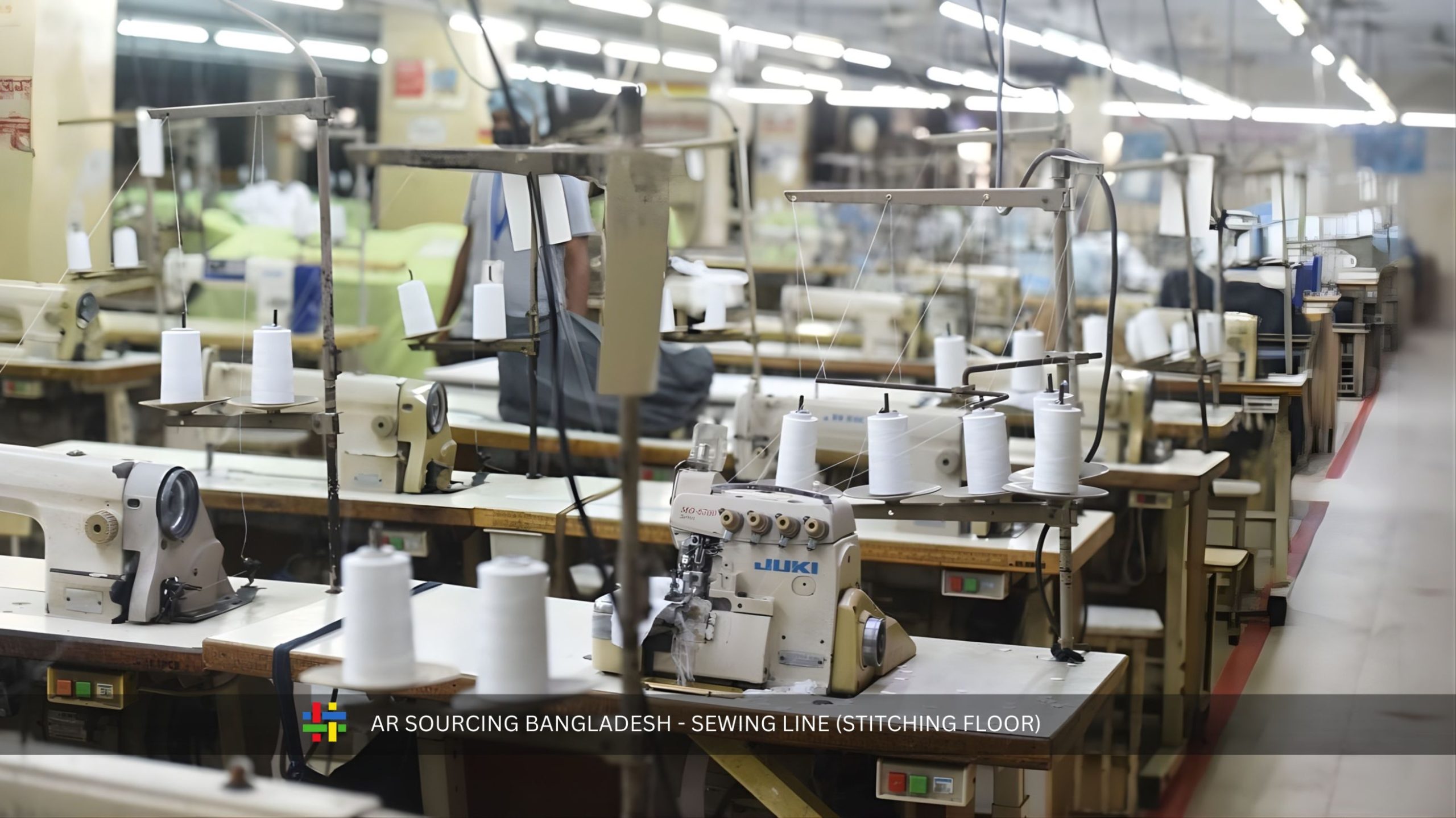
Once samples are approved, fabric is cut in bulk and moved through sewing lines. Larger factories use assembly-line production, where each operator specializes in a specific operation (collar attachment, sleeve setting, hemming, etc.).
6. In-Process Quality Checks
Inspectors monitor garments during production, not just at the end, to catch defects early and reduce rework.
7. Finishing and Pressing
Garments are trimmed of loose threads, pressed, and prepared for final inspection.
8. Final Inspection and Packaging
A final quality check confirms the order meets agreed standards before garments are folded, tagged, polybagged, and cartoned.
9. Shipping and Logistics
Finished goods are shipped via sea, air, or courier depending on order size, urgency, and budget.
Benefits of OEM Clothing Manufacturing
Understanding what is OEM clothing manufacturing naturally leads to the question: why do so many brands choose this model? Here are the core advantages across different business types.
For Fashion Brands
- Full creative control over design and branding
- Ability to build a distinct, non-generic product line
- Protects design ownership and intellectual property
For Startups
- Access to established factory infrastructure without capital investment in machinery
- Ability to launch original products without owning a factory
- Scalable production as order volume grows
For Retailers
- Consistent, repeatable production runs for private-branded assortments
- Greater control over product specifications compared to buying pre-made stock
- Easier compliance management across a single supplier relationship
For Wholesalers
- Ability to offer exclusive, branded product lines rather than generic stock
- Stronger margins through direct factory relationships
- Customization options that differentiate their catalog
For Importers
- Direct-from-factory sourcing that reduces middleman markups
- Greater transparency into production timelines and quality control
- Long-term partnership potential for recurring seasonal orders
12 Proven Benefits Summary:
- Full design ownership
- Brand-exclusive products
- No factory investment required
- Scalable order volumes
- Stronger quality control oversight
- Custom fabric and trim sourcing
- Competitive per-unit pricing at volume
- Direct manufacturer relationships
- Flexible customization across seasons
- Reduced dependency on generic stock
- Improved compliance management
- Long-term supply chain reliability
OEM vs ODM Clothing Manufacturing
One of the most common points of confusion in sourcing is the difference between OEM and ODM. Both are legitimate manufacturing models, but they serve different business needs.
| Factor | OEM Clothing Manufacturing | ODM Clothing Manufacturing |
|---|---|---|
| Design Ownership | Brand owns the design | Factory owns the base design |
| Design Responsibility | Brand provides full tech pack | Factory develops the design |
| Customization | High — built from scratch | Moderate — modifications to existing design |
| Cost | Generally higher due to development work | Often lower, since design is pre-existing |
| Lead Time | Longer, due to full development cycle | Shorter, since base design already exists |
| Intellectual Property | Belongs to the brand | May be shared or retained by the factory |
| Brand Control | Complete control over every detail | Limited to customizable elements |
| Best Suited For | Established brands wanting original products | Startups needing faster, lower-cost launches |
In short, OEM is ideal when a brand wants complete ownership and originality. ODM is a faster, more budget-friendly route when a brand is comfortable adapting an existing base design.
OEM vs Private Label Clothing Manufacturing
Private label manufacturing is another model frequently compared to OEM. While both involve manufacturing under a brand’s name, the level of customization is very different.
| Factor | OEM Clothing Manufacturing | Private Label Manufacturing |
|---|---|---|
| Starting Point | Brand’s original tech pack and design | Factory’s existing base product |
| Customization Level | Complete — construction, fit, and fabric are brand-defined | Limited — usually labeling, color, or minor trims |
| Design Investment | High, requires full product development | Low, ready-made base pattern |
| Speed to Market | Slower, but fully original | Faster, ideal for quick launches |
| Brand Differentiation | Strong — unique product in the market | Moderate — product may resemble competitors |
| Ideal For | Brands building a signature product line | Brands wanting quick, low-risk market entry |
Many growing brands actually use both models strategically — private label for fast-moving basics, and OEM for signature or hero products that define the brand identity.
Why Fashion Brands Choose OEM Clothing Manufacturing
From a B2B perspective, brands choose OEM clothing manufacturing when they need more than a generic product — they need a manufacturing partner capable of executing their exact vision at scale.
Key reasons include:
- Protecting brand identity through fully original, non-duplicated designs
- Competitive differentiation in a market saturated with similar private-label products
- Long-term supplier partnerships that support seasonal collections and repeat orders
- Greater negotiating leverage on fabric sourcing and pricing at higher volumes
- Consistency across production runs, which builds customer trust and reduces returns
For brands planning multi-season growth, OEM manufacturing also creates a foundation for stronger supplier relationships, since the factory becomes deeply familiar with the brand’s construction standards and quality expectations over time.
Industries That Use OEM Clothing Manufacturing
OEM apparel manufacturing spans far beyond casual fashion. It’s widely used across:
- Sportswear – performance fabrics, technical construction
- Workwear – durability-focused garments for industrial use
- Uniforms – standardized fit and branding across large orders
- Streetwear – trend-driven, design-heavy collections
- Kidswear – safety-compliant construction and sizing
- Activewear – stretch fabrics and moisture-wicking technology
- Corporate Apparel – branded staff clothing and merchandise
- Medical Uniforms – functional, easy-care garments for healthcare settings
- Hospitality Uniforms – consistent branding for hotels and restaurants
- Promotional Clothing – custom branded apparel for marketing campaigns
Each of these industries relies on OEM production because it allows precise control over fit, function, fabric performance, and branding — requirements that off-the-shelf products often can’t meet.
MOQ in OEM Clothing Manufacturing
Minimum Order Quantity (MOQ) is one of the first questions most B2B buyers ask when exploring OEM clothing manufacturing.
What MOQ Means
MOQ refers to the smallest quantity a factory is willing to produce per style, color, or order. It exists because manufacturers need to justify setup costs — fabric cutting, machine calibration, and labor allocation — across a production run.
How MOQ Affects Pricing
Generally, higher order volumes lead to better per-unit pricing, since fixed costs like sampling, pattern making, and machine setup are spread across more units. Smaller orders may carry higher per-piece costs to offset these fixed expenses.
MOQ Negotiation
MOQ isn’t always fixed. Buyers can often negotiate based on:
- Combining multiple colorways or sizes within one style to meet a factory’s total MOQ
- Building a long-term relationship that allows for lower initial MOQs
- Choosing simpler designs or fabrics that are easier for the factory to source in smaller quantities
- Committing to repeat orders across future seasons
Since MOQ requirements vary significantly between manufacturers and product categories, it’s best to discuss specific numbers directly with your production partner rather than relying on industry averages.
Sampling Process
Sampling is one of the most critical stages in OEM clothing manufacturing, since it determines whether the final bulk order matches the brand’s expectations. There are several distinct sample types, each serving a different purpose.
| Sample Type | Purpose |
|---|---|
| Prototype Sample | Initial version to visualize the design concept |
| Fit Sample | Confirms garment fit and proportions on a body form or model |
| PP Sample (Pre-Production) | Final approval sample before bulk cutting begins |
| Size Set | Confirms accurate grading across the full size range |
| Sales Sample | Used for marketing, catalogs, or buyer presentations |
| Shipment Sample | Reference sample kept for comparison against the final bulk shipment |
Each sample round is an opportunity to catch issues early — in fabric behavior, stitching, fit, or finishing — before they become costly problems in bulk production.
Lead Time
Lead time in OEM clothing manufacturing refers to the total time from order confirmation to shipment. This includes sampling, material sourcing, bulk production, quality control, and packaging.
It’s important to understand that actual lead times vary significantly depending on:
- Product complexity and number of components
- Fabric and trim availability
- Order volume and number of colorways or sizes
- The factory’s existing production schedule and capacity
Because of these variables, there’s no single fixed timeline that applies to every OEM order. Brands should request a realistic production schedule directly from their manufacturer based on the specific style, fabric, and quantity involved, rather than assuming a standard turnaround.
Quality Control
Quality control in OEM clothing manufacturing typically happens across multiple checkpoints rather than a single final check. This layered approach helps catch defects early and reduces the risk of shipping non-compliant goods.
| Inspection Stage | What It Covers |
|---|---|
| Incoming Inspection | Checks raw materials — fabric, trims, and accessories — before production begins |
| Inline Inspection | Monitors garments as they move through the production line |
| Final Inspection | Reviews finished garments before packing |
| AQL Inspection | Uses statistical sampling (Acceptable Quality Limit) to assess a batch’s overall defect rate |
| Packaging Inspection | Confirms correct folding, labeling, and carton preparation before shipment |
A strong OEM manufacturer builds quality checkpoints into every stage of production rather than relying solely on a final inspection, which significantly reduces the risk of shipping defective goods.
Compliance
Compliance is a critical consideration for any B2B buyer sourcing through OEM clothing manufacturing, particularly for brands selling into regulated markets.
Social Compliance
This covers fair labor practices, safe working conditions, and adherence to local labor laws within the factory.
Environmental Compliance
Factories increasingly need to demonstrate responsible waste management, water usage, and emissions practices.
Ethical Sourcing
This includes transparent sourcing of raw materials and traceability throughout the supply chain.
Factory Audits
Many buyers request or commission third-party factory audits to verify working conditions, safety standards, and compliance documentation before committing to a manufacturing partnership.
Certifications such as GOTS, OEKO-TEX®, WRAP, and ISO standards are commonly referenced examples within the industry, though specific certification requirements should always be confirmed directly with the manufacturer rather than assumed.
Sustainability
Sustainable practices are becoming a standard expectation in OEM clothing manufacturing rather than an optional add-on. Common sustainability practices include:
- Sourcing organic, recycled, or certified fabrics
- Reducing fabric waste through efficient pattern layouts (marker making)
- Implementing water- and energy-efficient dyeing and washing processes
- Partnering with certified sustainable material suppliers
- Reducing packaging waste through recyclable or minimal packaging materials
Brands that prioritize sustainability in their sourcing decisions often work closely with manufacturers to align on fabric choices, waste reduction targets, and responsible production practices from the earliest stages of product development.
Cost Factors
OEM clothing manufacturing costs are influenced by multiple variables rather than a single fixed price list. Key cost factors include:
- Fabric composition and quality – natural fibers, technical fabrics, and blended materials all carry different costs
- Garment complexity – number of components, seams, and construction techniques
- Trims and accessories – zippers, buttons, embroidery, and branding elements
- Order volume – larger orders typically reduce per-unit costs
- Sampling requirements – multiple sample rounds add development costs
- Quality control level – more rigorous inspection processes may add cost but reduce risk
- Shipping method – air freight versus sea freight significantly affects landed cost
- Packaging requirements – custom packaging adds cost compared to standard options
Because pricing depends heavily on product specifications and order details, buyers should request a detailed quotation based on their specific tech pack rather than relying on general industry pricing benchmarks.
How to Choose the Right OEM Clothing Manufacturer
Choosing the right partner is one of the most important decisions a brand will make. Use this checklist to evaluate potential manufacturers:
Buyer Checklist
- Does the factory have experience with your specific product category?
- Can they provide references or past production samples?
- Do they offer transparent MOQ and pricing structures?
- What quality control processes do they follow?
- Are they willing to accommodate factory audits or third-party inspections?
- Do they have experience with your target market’s compliance requirements?
- What is their communication responsiveness during sampling?
- Can they handle your required order volume and growth plans?
- Do they offer flexibility in fabric and trim sourcing?
- What is their track record on lead time reliability?
- Do they provide clear documentation throughout production?
- Are their sustainability practices aligned with your brand values?
A manufacturer that scores well across this checklist is far more likely to become a reliable long-term production partner rather than a one-time vendor.
Common Mistakes
Even experienced buyers make avoidable mistakes when sourcing through OEM clothing manufacturing. Watch out for these common pitfalls:
- Sending incomplete tech packs, leading to sampling delays and miscommunication
- Skipping sample approval stages to save time, which often causes bulk production errors
- Choosing a manufacturer based solely on price, without evaluating quality or compliance
- Underestimating lead times, resulting in missed launch or delivery dates
- Failing to request factory audits or references before committing to large orders
- Not clarifying MOQ and pricing tiers upfront, causing budget surprises later
- Overlooking compliance requirements for the target retail market
- Poor communication of packaging and labeling requirements, leading to costly rework
Avoiding these mistakes often comes down to clear documentation, realistic timelines, and thorough vetting before production begins.
Expert Tips
Based on decades of hands-on apparel manufacturing experience, here are practical tips for B2B buyers navigating OEM production:
- Invest in a detailed tech pack — the clearer your specifications, the fewer costly revisions later.
- Always request a PP sample before bulk production, even under time pressure.
- Build relationships, not just transactions — long-term manufacturer partnerships often lead to better pricing and priority scheduling.
- Diversify your supplier base for critical product categories to reduce supply chain risk.
- Communicate compliance requirements early, not after production has started.
- Plan lead times conservatively, especially for new product categories or complex constructions.
- Visit the factory when possible, or commission a third-party audit if an in-person visit isn’t feasible.
- Keep a shipment sample on file for every bulk order as a quality reference point.
Frequently Asked Questions
1. What is OEM clothing manufacturing in simple terms? It’s a production model where a factory manufactures garments based entirely on a brand’s own design and specifications, while the brand retains full ownership of the design and intellectual property.
2. How is OEM different from ODM in apparel manufacturing? In OEM, the brand provides the complete design and tech pack. In ODM, the factory provides an existing design that the brand can customize to a limited degree.
3. Is OEM clothing manufacturing suitable for startups? Yes, many startups use OEM manufacturing to produce original designs without investing in their own factory or machinery.
4. What does MOQ mean in OEM clothing manufacturing? MOQ stands for Minimum Order Quantity — the smallest quantity a factory will accept per order, style, or colorway.
5. Can MOQ be negotiated with an OEM manufacturer? In many cases, yes. Combining sizes or colors, building long-term relationships, or committing to repeat orders can sometimes lower MOQ requirements.
6. How long does OEM clothing production take? Lead times vary based on product complexity, fabric availability, and order volume, so it’s best to confirm timelines directly with your manufacturer.
7. What is a tech pack in OEM manufacturing? A tech pack is a detailed document containing measurements, construction details, trims, and specifications used by the factory to produce a garment accurately.
8. What is a PP sample? A PP (Pre-Production) sample is the final approved sample used as the reference standard before bulk production begins.
9. Does OEM manufacturing include fabric sourcing? Yes, in most OEM arrangements, the manufacturer sources fabric and trims according to the brand’s specifications, unless the brand supplies its own materials.
10. What industries commonly use OEM clothing manufacturing? Sportswear, workwear, uniforms, streetwear, kidswear, activewear, corporate apparel, and promotional clothing are common examples.
11. What is AQL inspection in garment quality control? AQL (Acceptable Quality Limit) inspection uses statistical sampling to assess the defect rate of a production batch before shipment.
12. Is OEM manufacturing more expensive than private label? OEM manufacturing often involves higher development costs due to full customization, while private label uses existing base products, which can be more cost-effective for faster launches.
13. Who owns the design in OEM clothing manufacturing? The brand owns the design and intellectual property, since the manufacturer produces strictly according to the brand’s specifications.
14. What compliance factors should buyers consider in OEM sourcing? Social compliance, environmental compliance, ethical sourcing, and factory audits are key areas to evaluate before committing to a manufacturer.
15. How can a brand ensure quality in OEM production? Through multiple inspection stages, including incoming, inline, final, and AQL inspections, along with clear sample approvals before bulk production.
16. Can small brands work with OEM manufacturers? Yes, though MOQ requirements and pricing structures should be discussed directly, since these vary by manufacturer and product type.
17. What is the role of sampling in OEM manufacturing? Sampling confirms design accuracy, fit, and construction quality before committing to bulk production, reducing the risk of costly errors.
18. How does sustainability factor into OEM clothing manufacturing? Many manufacturers now offer sustainable fabric sourcing, waste reduction practices, and responsible production processes as part of OEM services.
19. What should buyers look for when choosing an OEM manufacturer? Experience with the product category, transparent pricing, strong quality control, compliance alignment, and reliable communication.
20. Can OEM and private label manufacturing be used together? Yes, many brands use private label for quick-turn basics and OEM for signature or differentiated products within the same overall product line.
Conclusion
Understanding what is OEM clothing manufacturing gives B2B buyers a clearer foundation for making informed sourcing decisions. This model offers full design ownership, strong customization potential, and scalable production — making it a preferred choice for fashion brands, startups, retailers, wholesalers, and importers who want original, brand-defining products.
From tech pack development through sampling, bulk production, quality control, and shipping, OEM clothing manufacturing provides the structure and control needed to bring an original apparel vision to life at scale. By choosing the right manufacturing partner, clarifying MOQ and compliance requirements upfront, and investing in thorough sampling, brands can build a reliable, long-term production partnership that supports sustainable growth.
Ready to Start Your OEM Clothing Production?
Whether you’re developing your first original collection or scaling an existing product line, our team offers full-service OEM manufacturing, product development, sampling, bulk production, and private label solutions tailored to your brand’s specifications.
Contact us today to discuss your tech pack, request a quotation, or schedule a consultation with our apparel manufacturing team — and turn your original designs into production-ready garments.