AR Sourcing Bangladesh

Bangladesh Apparel Industry 2026: Trends, Growth & Why Brands Source Here

Dynamic Hero Section

Bangladesh’s Apparel Industry in 2026: Inside the World’s Second-Largest Garment Exporter

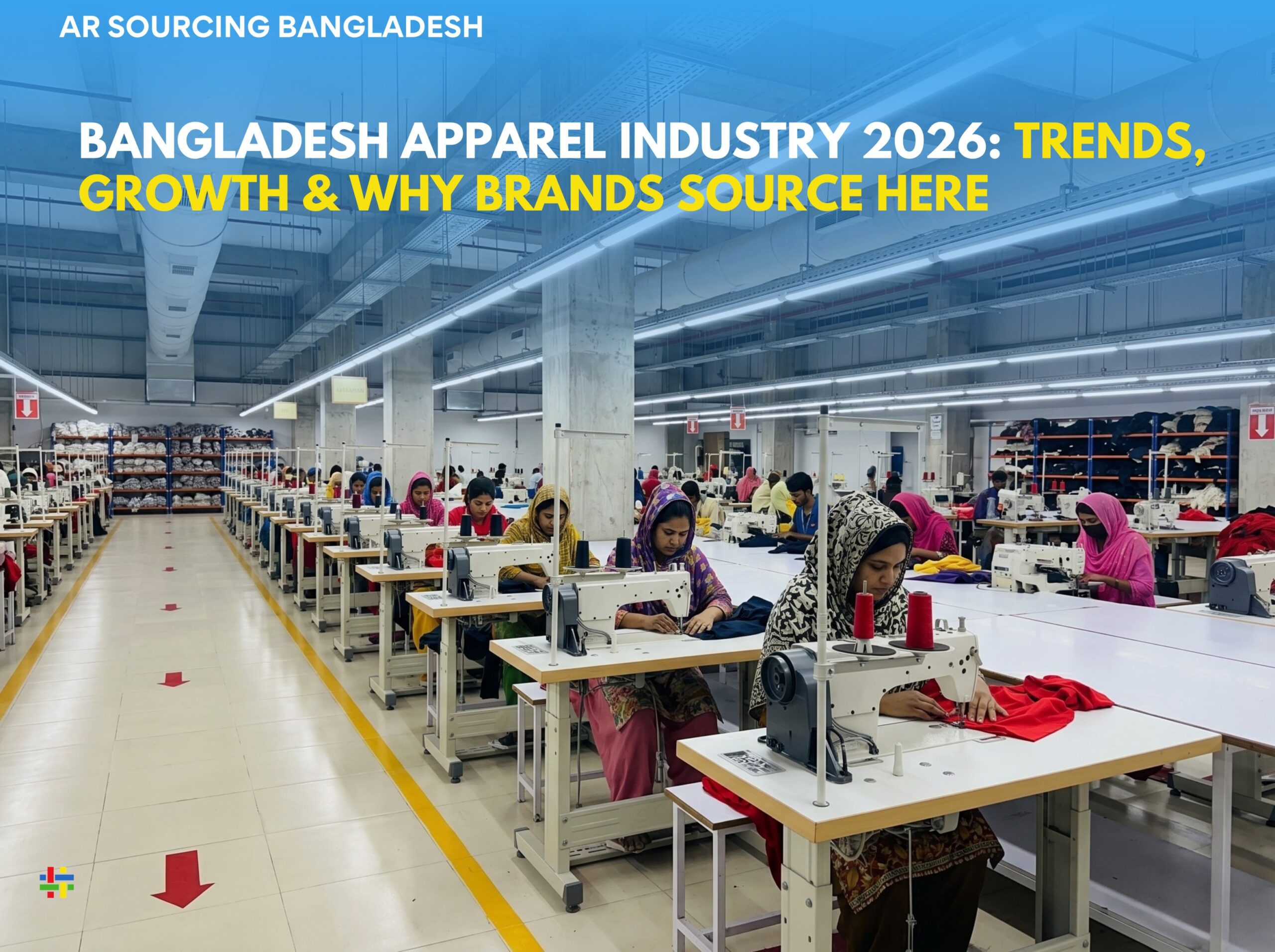
For more than four decades, Bangladesh has quietly clothed the world. From high-street basics to technical performance wear, garments stitched in Dhaka, Chattogram, and Gazipur make their way into wardrobes across more than 150 countries. Today, Bangladesh stands as the world’s second-largest apparel exporter, trailing only China — and 2026 is shaping up to be one of the most transformative years in the industry’s history.

For brands, buyers, and sourcing teams evaluating where to manufacture next, understanding what’s actually happening inside Bangladesh’s apparel sector — beyond the headlines — matters more than ever. Here’s a clear, up-to-date look at where the industry stands, what’s changing, and why it remains a cornerstone of global apparel manufacturing.

A quick snapshot of Bangladesh’s apparel industry

Bangladesh’s ready-made garment (RMG) sector isn’t just a major industry — it is the country’s economy in many respects:

  • Over 80% of Bangladesh’s total export earnings come from ready-made garments
  • The sector is home to an estimated 4,000+ active garment factories
  • Bangladesh exports apparel to more than 150 countries worldwide
  • In FY2024–25, RMG exports reached approximately $39.35 billion, growing nearly 9% year-on-year
  • The industry directly employs roughly 4 million workers, around 60% of them women

These numbers explain why global retailers — from fast fashion giants to premium activewear brands — continue to anchor their supply chains in Bangladesh, even as sourcing strategies shift worldwide.

Key trends shaping the industry in 2026

1. Life after LDC graduation

On 24 November 2026, Bangladesh will officially graduate from the United Nations’ Least Developed Country (LDC) category — a milestone that reflects decades of economic progress. It also means the duty-free, quota-free trade benefits Bangladesh has long enjoyed in many markets will gradually phase out.

Rather than treating this as a threat, the industry — led by BGMEA (Bangladesh Garment Manufacturers and Exporters Association) — is actively preparing for it. Recent budget proposals have prioritized industrial competitiveness, energy security, and customs simplification specifically to support manufacturers through this transition.

2. Aggressive market and supply diversification

Bangladesh is no longer putting all its eggs in the EU-and-US basket. In 2026, BGMEA has signed cooperation agreements with Japan’s Marubeni Corporation to grow exports to Japan, deepened raw material partnerships with Brazil (which now supplies close to $1 billion in cotton imports annually, the highest of any sourcing country), and pushed for stronger trade ties with Latin America’s Mercosur bloc and the Middle East.

This diversification cuts both ways — new export markets for finished garments, and new, more resilient raw material supply chains for manufacturers.

3. Sustainability is now a competitive advantage, not a compliance checkbox

Bangladesh has spent the past decade quietly becoming the global leader in green garment manufacturing. The country is home to more LEED-certified green factories than any other nation on earth, including some of the highest-scoring LEED facilities in the world.

In 2026, this push has accelerated further:

  • BGMEA signed an MoU with AWAREâ„¢, a Netherlands-based traceability platform, to advance Digital Product Passports for apparel
  • A partnership with Open Supply Hub is improving supply chain transparency for global brands
  • Multiple factories are transitioning toward Zero Liquid Discharge (ZLD) water systems, supported by new green financing windows

For brands under growing pressure from EU and US regulations on supply chain transparency and ESG reporting, this matters as much as price.

4. A shift from volume to value

Industry leaders are openly pushing the sector to move beyond cheap, high-volume basics. There’s a clear and growing emphasis on technical garments, performance and seamless wear, and higher value-added products — a shift designed to protect margins as labor and energy costs rise, and to future-proof the industry beyond LDC graduation.

5. Digitalization and skills investment

From AI-assisted quality inspection to digital production tracking, factories are investing in technology to stay competitive. At the same time, institutions like the HSBC-AUW School of Apparel are training the next generation of industry professionals — with a particular focus on building more women into leadership roles in a sector where they make up the majority of the workforce.

Navigating near-term headwinds

It would be incomplete to say the industry’s path forward is without challenges. Like apparel manufacturers worldwide, Bangladesh has felt the effects of softer demand in Western markets, rising shipping and input costs, and tighter buyer budgets over the past year. Export growth has been uneven month to month as a result.

What’s notable, though, is the industry’s response: rather than competing harder on price, manufacturers and policymakers are doubling down on the strategies above — diversifying markets, upgrading capability, and strengthening compliance — as the more durable path to long-term competitiveness.

Why global brands continue to choose Bangladesh

Despite a more complex operating environment, the fundamentals that built Bangladesh’s apparel industry remain firmly in place:

  • Scale and capacity — few countries can match Bangladesh’s combination of factory density and production capacity
  • Skilled, experienced workforce — built over 35+ years of dedicated garment manufacturing
  • Compliance infrastructure — factories widely certified under BSCI, WRAP, SEDEX, OEKO-TEX, GRS, ZDHC, Higg Index, GOTS, and more
  • Sustainability leadership  unmatched globally in LEED-certified green manufacturing
  • Competitive, vertically-integrated supply chains  from spinning and knitting to finishing and logistics

What this means for brands and buyers

For sourcing teams, the takeaway is simple: Bangladesh’s apparel industry isn’t standing still, and neither should your sourcing strategy. The brands getting the most value from Bangladesh today are the ones working with partners who understand which factories are investing in compliance and innovation, which raw material trends are emerging, and how to navigate the post-LDC landscape not just the ones chasing the lowest unit price.

That’s where an experienced, on-the-ground sourcing partner makes the difference between a transactional order and a long-term, resilient supply chain.

Frequently asked questions

Why is Bangladesh a top destination for apparel sourcing? Bangladesh combines large-scale manufacturing capacity, a highly experienced workforce, competitive costs, and one of the world’s most extensive compliance and sustainability certification networks  making it a reliable choice for brands of nearly every size and category.

What is the RMG industry in Bangladesh? RMG stands for Ready-Made Garments  the umbrella term for Bangladesh’s apparel manufacturing sector, which produces finished clothing for export rather than raw textiles alone. It accounts for over 80% of the country’s total export earnings.

Is the Bangladesh apparel industry sustainable? Yes  Bangladesh hosts more LEED-certified green garment factories than any other country in the world, and the industry continues to invest heavily in water management, energy efficiency, and supply chain traceability.

What happens to Bangladesh’s apparel exports after LDC graduation? Bangladesh will gradually lose certain duty-free trade preferences after graduating from LDC status in November 2026. In response, the industry is diversifying export markets, raw material sourcing, and product value to maintain competitiveness.

Final thoughts

Bangladesh’s apparel industry in 2026 is not the same industry it was a decade ago — it’s more diversified, more compliant, more sustainable, and increasingly focused on value rather than just volume. For brands looking for a sourcing partner that understands this evolving landscape, that’s exactly the kind of long-term thinking worth aligning with.


Looking for a sourcing partner who’s already built for where Bangladesh’s apparel industry is headed? Talk to AR Sourcing Bangladesh → contact/quote page